Established in January 2022, the Marcin Król Award – named after the political philosopher and historian of ideas, and a longtime member of the Stefan Batory Foundation’s Board – is presented annually for the best book in the fields of the history of ideas and future studies, philosophy, and social and political thought, as well as reflections on civilization and culture, that introduces new ideas, concepts, or ways of thinking.
The award is intended to support the development of public debate by encouraging: in-depth reflection on contemporary phenomena and trends as well as the challenges of the future; the creation of new ideas and attempts to describe reality; the search for answers to the crisis of democracy and democratic values; and the expansion of the space for intellectual discourse beyond divisions.
The Marcin Król Award Selection Committee
Agata Bielik-Robson, Institute of Philosophy and Sociology of the Polish Academy of Sciences, University of Nottingham Przemysław Czapliński, Adam Mickiewicz University in Poznań Mikołaj Cześnik, Chair, SWPS University of Social Sciences and Humanities in Warsaw, Chair of the Board of the Stefan Batory Foundation Dariusz Gawin, Institute of Philosophy and Sociology of the Polish Academy of Sciences in Warsaw Iwona Jakubowska-Branicka, Institute of Applied Social Sciences, University of Warsaw Zofia Król, “Dwutygodnik”, Warsaw Elżbieta Matynia, The New School for Social Research in New York Zbigniew Nosowski, “Więź”, Warsaw Andrzej Rychard, Institute of Philosophy and Sociology of the Polish Academy of Sciences in Warsaw Henryk Woźniakowski, Znak Foundation for Christian Culture, Kraków
The Marcin Król Award 2026
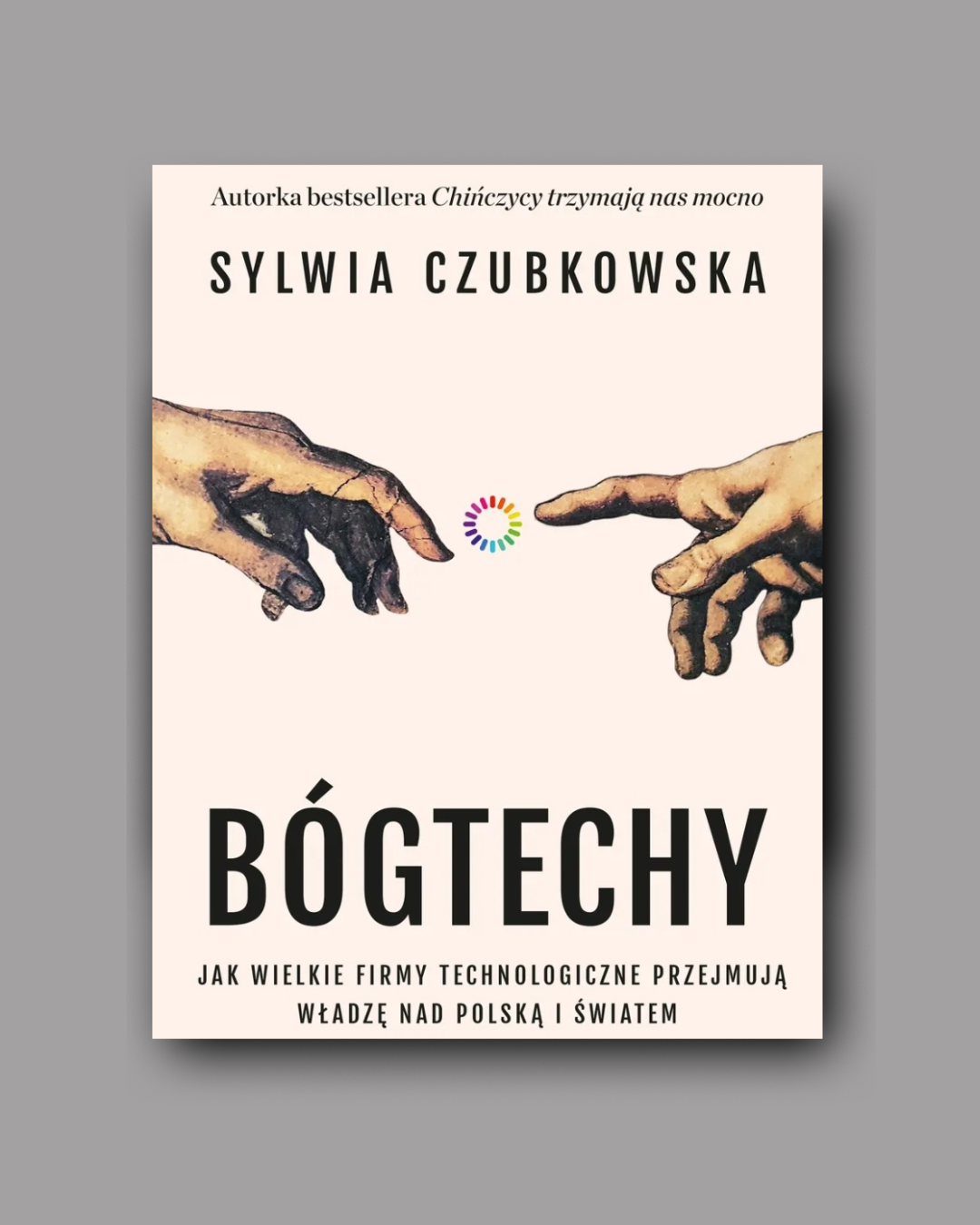
Sylwia Czubkowska, The God of Tech: How Big Tech Companies Are Taking Over Poland and the World, Znak Literanova Publishing House, Kraków 2025
In her book, Sylwia Czubkowska masterfully applies global analyses of “surveillance capitalism” and “techno-feudalism” to the Polish reality, into which transnational corporations are entering as new, digital sovereigns. The author brilliantly employs a historical analogy to the British East India Company to show how contemporary “network empires” are colonizing our democracy by exploiting knowledge asymmetries and the institutional weakness of the state. This is not just another theoretical treatise on the power of algorithms, but a deeply analytical case study that exposes the mechanisms of lobbying and the limited imagination of decision-makers who are surrendering more and more areas of life to the control of tech giants. As Michał Sutowski emphasized in his justification for nominating “God of Tech” for this year’s edition of the Award, the publication stands out for its relentless grounding in the local context, which makes it “the most comprehensive and up-to-date compendium on a key civilizational challenge for Poland.”
The Marcin Król Award 2025
Michał Brzeziński, Paweł Bukowski, Jakub Sawulski, Inequality, Polish Style: Why We Must Address It If We Want a Bright Future on the Vistula, Krytyka Polityczna Publishing House, Warsaw 2024
In the span of a single generation, Poland has gone from being one of the most egalitarian countries in Europe to one of the most unequal. The authors of the book – three economists working at leading universities – describe the phenomenon precisely, clearly, and from multiple perspectives. Above all, however, they convincingly argue that, regardless of one’s moral judgment, high and rapidly growing inequality harms the economy itself. Finally, they propose concrete solutions that would help increase equality of opportunity, income, and wealth in Poland.
The Marcin Król Award 2024
Jan Tokarski, In the Shadow of Catastrophe. “Encounter,” Congress on Cultural Freedom and the Memory of the 20th Century, Znak, Kraków 2023
The “catastrophe” referred to in the title encompasses World War I, the economic crisis, the rise of fascism and Nazism, the Spanish Civil War, and finally, World War II. Our pluralistic political culture – with its conviction regarding the inviolability of certain rights to which every human being is entitled – has its roots in this catastrophe, which has three fundamental facets: war, ideology, and totalitarianism. Jan Tokarski’s book makes it clear that, in this sense, neither the war in Ukraine and the war crimes committed by the Russians, nor the threat of nuclear conflict, nor the modern dictatorships being built in Moscow or Beijing are anything new.
The Marcin Król Award 2023
Konstanty Gebert, Final Solutions: Genocidaires and Their Work, Agora Publishing
Was the slogan “Never Again!” an empty phrase even when it was first coined? Is there any chance it could be effective? Regardless of the answer, there is no doubt that genocide remains a relevant topic today. Drawing on numerous documents and testimonies, Konstanty Gebert describes the “final solutions” in recent history across three continents – from the massacre of Namibia’s indigenous peoples by Imperial Germany, through the Armenian Genocide perpetrated by the Turks, the mass killings in Cambodia by the Khmer Rouge, and those in Rwanda and the former Yugoslavia to the ongoing extermination of the Uyghurs in China today – without shying away from the topic of crimes committed by the Russians in Ukraine.
The 2022 Marcin Król Award
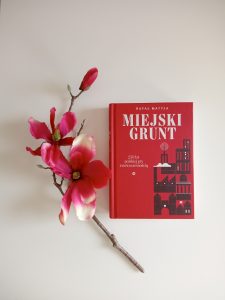
Rafał Matyja, Municipal Ground: 250 Years of Poland’s Engagement with Modernity, Karakter
Matyja understands the need for grand narratives, myths, and emotions, but recognizing their destructive effects on the political community, he presents something that unites – because it transcends the disputes between the Classicists and the Romantics, the Romantics and the Positivists, the National Democrats and the Sanators, and the PiS supporters and anti-PiS activists. What unites them, at least potentially, is the desire to live in a well-organized everyday life with properly functioning institutions and public services.