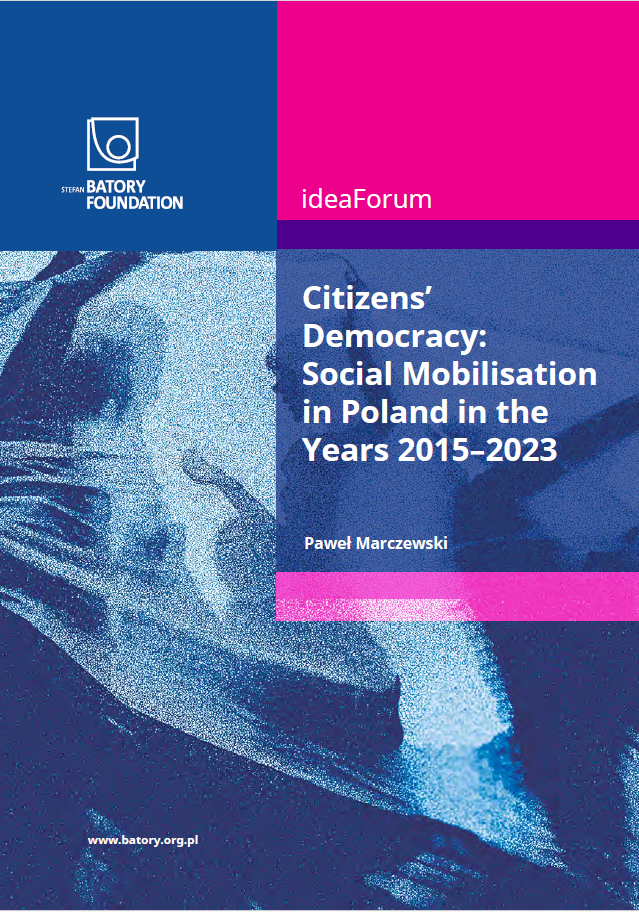
The history of civic activity in Poland in 2015–2023 – when the United Right coalition, led by the national-conservative Law and Justice (PiS) party, was in government for two parliamentary terms – is a story of
perseverance in the face of adversity and increasingly difficult conditions. It is a story of building competence and resilience in times of great crises: the COVID-19 pandemic, large-scale migration triggered
by Russia’s full-scale invasion of Ukraine, and actions by the authorities that violated the fundamental rights of citizens and necessitated effective resistance. It is also a chronicle of civil society organisations
gaining increasing public trust and recognition, as well as the emergence of completely new networks of cross-sector cooperation and previously unknown forms of civic self-organisation.
The most important change, as emphasised by almost everyone who agreed to be interviewed for this publication,1 was the emergence of new areas of cooperation between grassroots organisers and those involved in more formal structures, such as third-sector associations and foundations.
The subsequent social mobilisation culminated in the United Right government losing power in the parliamentary elections on 15 October 2023, amid record voter turnout. That turnout was achieved mainly as a result of mobilising people who were undecided on voting until the last moment, or who had previously been less interested in politics or discouraged from participating in it.
How did this happen? At what points did citizens lose trust in the Polish state and decide that they had to start keeping a close eye on those in power? How were new forms of cooperation built between citizens and civil society organisations? And what were the actual achievements of civic power?


 pobierz pdf